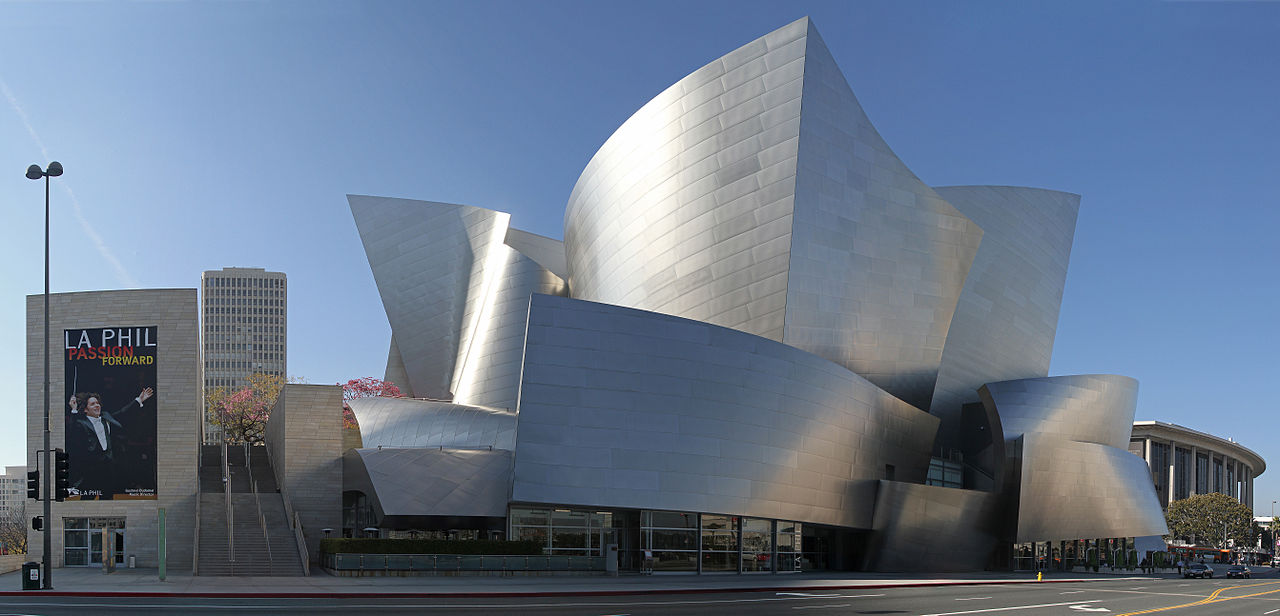
On October 9 and 11, Susanna Mälkki returns to conduct the Los Angeles Philharmonic and navigate Bartók’s Concerto for Orchestra’s shifting character that dances between a charming “game of pairs,” an eerie elegy, and a humorous jab at Shostakovich. Bartók himself described the piece as a gradual progression from the stern and stately to life-affirming enthusiasm.
Where Bartók treats the orchestra as a collection of soloists, Czech composer Miroslav Srnka imagines the symphony as a biological superorganism—like bees, ants, or perhaps humans—whose subtle movements and seemingly individual roles reveal a greater and hypnotic collective effect, with his piece Superorganisms making its US premiere. Closing the first half, the Los Angeles Philharmonic’s new Principal Oboe Ryan Roberts takes the spotlight in Martinů’s brief yet compelling Oboe Concerto, which offers lyrical beauty, jazz-inflected rhythms, and even a Czech polka.
She then returns to Europe, to conduct the HR-Sinfonieorchester in Frankfurt. The first concert, on October 21, takes place at the Alte Oper, with Mahler’s First Symphony on the program.
With this first, powerful symphony, the unpleasant whistling at the beginning, which is supposed to evoke the sounds of nature, one barely knows what to focus on. The false cuckoo calls of the clarinet, a fourth instead of the naturalistic cuckoo third? The blaring fanfares, the unnaturally high-pitched double bass, which is supposed to be played with irony? There is no symphony that so definitively buries an era and cleanses the ears like Mahler’s First.
On October 22 and 23 she conducts this same symphony at the Alte Oper, preceding it with Kaija Saariaho’s HUSH, her Concerto for Trumpet. HUSH proved to be Kaija Saariaho’s legacy: Susanna Mälkki conducted the posthumous premiere in 2023, with her compatriot Verneri Pohjola on trumpet then as now. The intrusion of everyday noises is composed into the music here, as can also be experienced so intensely in the music of Gustav Mahler.